.jpg)


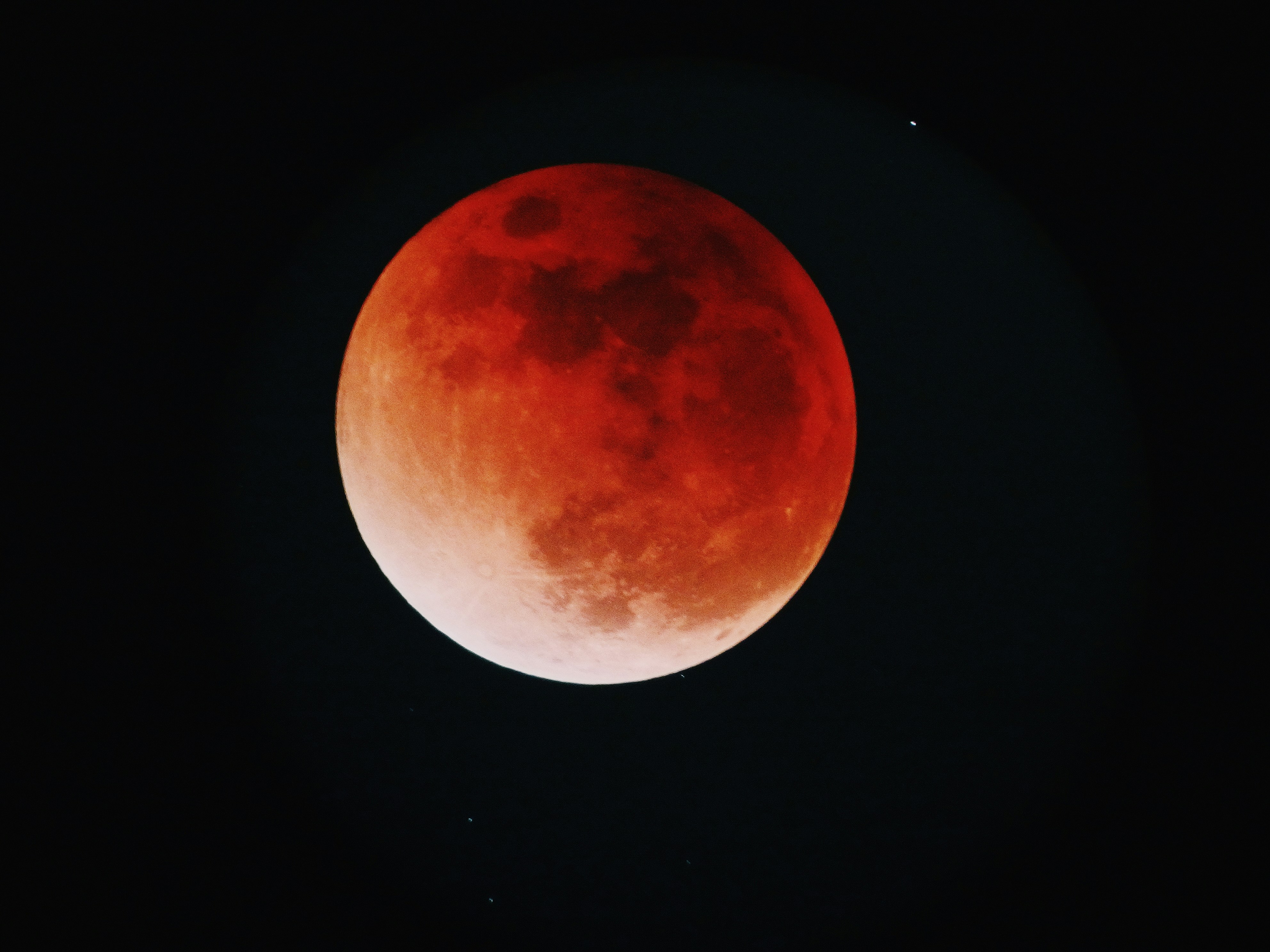
Photo | Yu Kato
There are moments the sky demands your attention. The total lunar eclipse on 3 March 2026 is one of them.
Known across civilisations as the Blood Moon, this rare celestial event occurs when Earth positions itself directly between the Sun and the Moon — casting its shadow so completely that the Moon turns a deep, burning crimson. Not from fire. But from the light of every sunrise and sunset on Earth, refracted through our atmosphere and painted across the lunar surface.
It is, by any measure, one of nature's most breathtaking performances.
What Exactly Is a Blood Moon?
A Blood Moon is simply what happens during a total lunar eclipse — when the Moon passes entirely into Earth's darkest shadow (the umbra). With most sunlight blocked, only the red and orange wavelengths of light bend around Earth's atmosphere and reach the Moon. The result? A glowing, rust-red orb hanging in the night sky.
On 3 March 2026, totality — the peak redness — lasts 58 minutes. That's nearly an hour of the Moon radiating an otherworldly copper glow.
Why This Eclipse Is Extraordinary
This isn't just any lunar eclipse. It is the last total lunar eclipse visible anywhere on Earth until New Year's Eve 2028. After tonight, the Blood Moon disappears from our skies for nearly three years.
This eclipse is also the third in an almost-tetrad — a rare sequence of four near-consecutive total lunar eclipses — following the total eclipses of March 2025 and September 2025.
Wikipedia We are, in celestial terms, at the closing of a chapter.
Astronomers note that the Moon will sit in the constellation Leo during the eclipse — the lion, the sign of leadership, legacy, and creative fire. Make of that what you will.
Where Can You See It?
The Blood Moon will be visible from North America, the Pacific, Australia, and East Asia — but not from Europe or Africa. BBC Sky at Night Magazine For Southeast Asian readers, eastern parts of the region will have visibility depending on local horizon and weather conditions.
Totality begins at 11:04 UTC (06:04 EST), with maximum eclipse — when the Moon appears darkest and most vividly red — at 11:33 UTC. BBC Sky at Night Magazine
No telescope required. No special glasses. Just you, the sky, and a clear horizon.
The Cultural Resonance
Across history, the Blood Moon has been a marker of transition. Ancient Mesopotamians read it as an omen. Indigenous cultures across the Americas treated it as a time of deep spiritual reflection. A lunar eclipse is a moment to turn inward, release what no longer serves, and prepare for new cycles.
Astrologer Kyle Thomas notes that this eclipse occurs in Virgo, an Earth sign associated with productivity, organisation, and health — making it a powerful moment to evaluate routines, streamline plans, and create meaningful changes. ABC News
In the Year of the Fire Horse — a year defined by speed, courage, and breaking free — a Blood Moon that closes a rare trilogy feels less like coincidence and more like punctuation. The universe underlining something.
What to Do on the Night
Step outside. Find a dark spot away from city lights. Look west if you're in Southeast Asia's eastern regions before dawn. Bring someone who matters. Let the silence do its work.
Sometimes the most luxurious thing you can do is simply look up.