.jpg)




Let's start with a story you already know.
A young man drops out of Harvard. He builds a company in a dorm room, garage, or a Silicon Valley apartment. The media calls him a genius. The internet makes him a mythology. And a generation of young people, smart, ambitious, burning with potential, look at that story and think: that could be me.
And they are right. It could be. The caveat is the part no one tells you about.
What if the real story, the full one without the media packaging, is more complicated? What if the dropout narrative is technically true but fundamentally incomplete? What if the part they left out is the part that actually explains everything?
"We were sold the highlight reel. The infrastructure was edited out."
The Book That Said It First — And Nobody Listened
In 2008, Canadian author Malcolm Gladwell published Outliers: The Story of Success. It became a global bestseller. It introduced the world to the concept of the 10,000-Hour Rule — the idea that mastery requires roughly 10,000 hours of deliberate practice.
But the part of that book people remember is not the most important part.
The part that matters, the part that should have rewritten how we talk about success, is the Bill Gates chapter.
Bill Gates is brilliant. That is not in question. But Gladwell asked a different question: what made it possible for that brilliance to become Microsoft?
The answer involves a very specific sequence of luck that had nothing to do with talent. Gates' wealthy parents enrolled him in Lakeside, a private school in Seattle catering to the city's elite families. In 1968, a year when most universities in the world did not yet have a single computer, the Lakeside Mothers' Club spent $3,000 of fundraising money on a computer terminal for the school's club.
Gates was 13. He had unlimited access to a machine that barely existed anywhere else on the planet.
By the time he dropped out of Harvard, he had already logged well over 10,000 hours of programming. He didn't leave Harvard to take a risk. He left because he had already done the work.

Photo | Jeroen den Otter
→ READ MORE ( Coming soon )
The Full Gladwell Breakdown: What Outliers Really Says About Why Talent Is Not Enough — a deeper Kulture Insider investigation.
Gladwell himself noted: without that access, Gates would likely have been 'a highly intelligent, driven, charming person and a successful professional.' Just not worth $50 billion.
So ask yourself: how many kids, just as intelligent and just as driven, came home from school in 1968 and had to cook dinner, look after younger siblings, or work a part-time job to help the family? Their talent didn't disappear. They just never got the 13-year-old's equivalent of a private computer terminal.
This is not a criticism of Bill Gates. It is a question about everyone else.
"How many brilliant kids never got the terminal?"
The Dropout Romance Is a Partial Truth
The story the media loves goes like this: young visionary drops out of elite university, bets everything on an idea, and changes the world. It is romantic. It is motivating. And in the age of social media, it has become a blueprint that an entire generation is trying to copy.
The problem is that blueprints only work when you are building the same structure. And most people, the 90% without the private school terminal, without the wealthy lawyer father, without the Silicon Valley neighbourhood, are building on completely different ground.
This is not about bashing privilege. Privilege is not a crime. And the innovations that have come from Gates, Zuckerberg, Musk and others have genuinely changed the world. That is real and that matters.
But when young people are told 'skip university, become a content creator, build an app, just do it like Mark did', without being told the full context of how Mark got where he is. That is not inspiration. That is an incomplete map handed to someone who is about to walk into a forest.
University is not just about a degree. It is about network. Access. The rooms you get into. The people you meet at 19 who call you at 35. The world's first university, Al-Qarawiyyin, founded in Fez, Morocco in 859 AD. It was not built to issue certificates. It was built to gather minds, create discourse, and multiply access to knowledge. That mission has never changed. What has changed is the marketing around it.
The Ivy League is not just education. It is infrastructure. It is a network that opens doors which remain locked for everyone else. Not because those outside are less capable, but because the door was never designed for them.

Photo | Emily Karakis
And so the question becomes: what does the 90% do? The people who do not have the terminal, the private school, the inherited network? The ones who are brilliant, told, repeatedly, that their path should look like someone else's?
.jpg)
Photo | Abdel Hassouni -
"What does the 90% do? They do the work quietly. Then they open their chapter."
The Real Path. The One Nobody Romanticises.
They go to work. They spend years, sometimes decades, inside industries that teach them things no classroom can. They build relationships slowly, carefully, without funding rounds or press releases. They absorb failure quietly. They get better, invisibly.
And then, in their late 30s or 40s, when the moment finally arrives. When the right idea, the right market, and the right version of themselves all exist at the same time. They do not hesitate.
The Kauffman Foundation's research confirms what intuition already knows: a founder aged 50 is twice as likely to build a company that achieves a successful exit as a founder aged 30. The average age of a business owner in the United States is 45.
The data does not celebrate this. The media does not celebrate this. But the businesses these founders build? They last.
But before we get to them, one thing needs to be said clearly.
"This is not a story about overcoming poverty. It is a story about respecting time."
Why These Seven. And What They Actually Have In Common.
None of the founders in this piece are here because they came from nothing. That is not the story. Some grew up comfortably. Some went to good universities. Some had decent jobs before they built anything of their own. They are, by most definitions, ordinary people with ordinary starting points.
That is exactly the point.
What they share is not a dramatic backstory. What they share is that they spent years, real years, inside an industry before they ever put their name on a company. They were not five-year founders. They were people who worked, observed, built expertise, made mistakes quietly, and kept going. And then, when they finally started something, they were not starting from an idea. They were starting from 15, 20, sometimes 25 years of knowing exactly how that world worked from the inside.
So when you look at the numbers — the RM220 million acquisition, the Nobel Prize, the 20 million students, the $300 billion valuation — and you feel that familiar mix of awe and quiet defeat, here is what you are actually looking at:
Five years of company. Plus 20 years of industry experience. That is 25 years of compounding. We just forgot to count the first 20.
These are not nepo babies. They did not inherit the company or the network or the head start. But they are also not the romanticised dropout story. They are something quieter and more honest than either of those narratives: people who took the long road, stayed on it long enough to understand every bend in it, and then built something that could only have been built by someone who had been on that road as long as they had.
You cannot shortcut that. You can be clever. You can move fast. You can find smarter ways to do certain things. But the depth that makes a business last, the kind of understanding that helps you see around corners, recognise the right opportunity, avoid the traps that sink people with great ideas but no experience — that only comes from time inside the work.
These seven knew the work. That is why their companies are what they are.
01. Gaik Wong — The RM220 Million Chicken Rice Empire
Behind the scenes: 25 years as COO, KFC Malaysia.
The chapter: Founded The Chicken Rice Shop at 50.
Gaik Wong did not wake up one day and decide to start a restaurant. She spent 25 years as the Chief Operating Officer of KFC Malaysia, helping take the company public, expanding it nationally, and building Ayamas, Malaysia's first nationally branded chicken company. She understood supply chains, licensing, franchise models, and consumer behaviour on a level that no MBA programme could have taught her.
When she founded The Chicken Rice Shop, she was not experimenting. She was executing, with 25 years of industry intelligence behind every decision.
The chain grew to over 60 outlets across Malaysia, the Philippines, and Taiwan. In 2019, Japan's Zensho Holdings, the largest food service company in Japan and among the top ten globally, acquired it for RM220 million.
She was not late. She was ready.

02. Tyler Brûlé — Shot Twice. Built Twice.
Behind the scenes: War correspondent, founder of Wallpaper magazine.
The chapter: Founded Monocle at 39.
In 1994, Tyler Brûlé was shot by a sniper in Kabul while covering the war in Afghanistan as a freelance journalist. He spent months recovering. Then he founded Wallpaper magazine, which redefined global design culture through the 1990s.
In 2007, at 39, he did it again. He raised private investment entirely on the strength of his own reputation and founded Monocle, a global media company spanning print, 24-hour radio, retail, and cafés across the world's most important cities. Valued at over $115 million when Japanese publisher Nikkei acquired a minority stake in 2014.
No media dynasty. No inherited network. Just a man who had seen the world at its most extreme, come back knowing exactly what the global nomad class needed, and built it.

Photo | Eirik Solheim Wikipedia
03. Maria Ressa — 25 Years in the Field. One Nobel Prize.
Behind the scenes: 25 years as CNN bureau chief, Manila and Jakarta.
The chapter: Founded Rappler at 49.
Maria Ressa spent 25 years as CNN's bureau chief across Southeast Asia, covering six coup attempts, the fall of Suharto, the East Timor independence crisis, and the emergence of regional terrorism. She had reported the story before anyone else knew it was a story.
In 2012, at 49, she founded Rappler, an investigative digital media platform built on the conviction that truth-telling, not traffic, was the only sustainable model for journalism.
In 2021, Maria Ressa was awarded the Nobel Peace Prize for her work using freedom of expression to expose the abuse of power. Rappler became one of the most significant media platforms in Southeast Asia.
She did not found Rappler to start a career. She founded it because she had spent 25 years becoming the only person qualified to build exactly that thing.

04. Codie Sanchez — From Conflict Journalism to a Nine-Figure Empire
Behind the scenes: Conflict journalist, 15 years across Goldman Sachs, Vanguard and private equity.
The chapter: Founded Contrarian Thinking at 34.
Codie Sanchez began her career covering human trafficking and cartel violence in Mexico, earning the Robert F. Kennedy Award for print journalism. Then she pivoted entirely, spending 15 years inside some of the most demanding financial institutions in the world: Goldman Sachs, Vanguard, State Street, and private equity, where she built one of the largest Latin American investment portfolios in her sector.
In 2020, she launched Contrarian Thinking, a media and investment company that teaches people how to buy and build small businesses. Within four years: 2.5 million subscribers. A portfolio of businesses doing nine figures in combined revenue.
She is described as an overnight success. She is a 15-year accumulation of two careers most people would never have the courage to start, let alone master.

Photo | Codie Sanchez Facebook
05. Felix Dennis — From the Streets of London to Publishing's Biggest Empire
Behind the scenes: Sold underground magazines on the streets of London. Decades inside the publishing industry.
The chapter: Built Dennis Publishing in his 40s.
Felix Dennis left school with no qualifications. He grew up with no money and no connections. In the late 1960s he was selling underground magazines on the streets of London.
Through the 1970s and 80s, he ground his way through the publishing industry, learning production, advertising, distribution, and editorial from the ground up. No shortcuts. No inheritance. Just accumulated mastery.
In his 40s, Dennis Publishing launched Maxim, which became the world's best-selling men's lifestyle magazine, and acquired The Week, which continues to publish globally. His US magazine portfolio reportedly sold for $250 million.
He knew the industry completely before he dominated it. That is not luck. That is the only way it actually works.
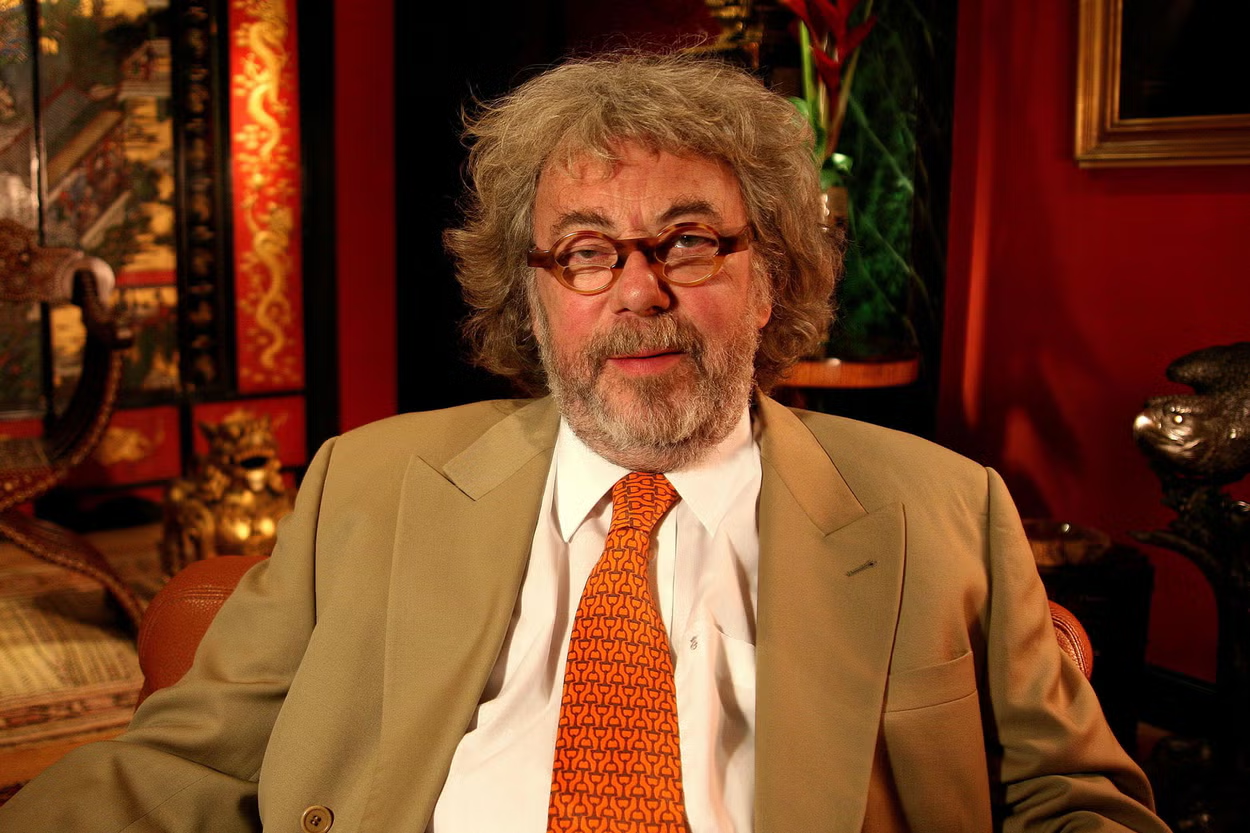
Photo | independent.co.uk
06. Chip Wilson — 42 Years Old, One Yoga Class, One Category Redefined
Behind the scenes: Years in the apparel industry; parents were teachers and athletes
The chapter: Founded Lululemon at 42 in 1998. Built aglobal lifestyle brand worth billions.
Chip Wilson was 42 years old when he took his first yoga class in Vancouver in 1998and spotted something that his years in apparel had trained him to see: the technical activewear market had a serious gap, and nobody in the premium spacewas solving it.
He founded Lululemon that same year. Born in California and raised in Canada,Wilson did not come from wealth. His parents were teachers and athletes. Whathe had instead was years of working inside the apparel industry — understanding fabrics, supply chains, consumer behaviour, and the mechanics of how a productbecomes a culture.
Wilson brought to Lululemon what the big sportswear companies could not: an obsessionwith specific aesthetics, functional premium design, and the kind ofcommunity-led brand-building that cannot be replicated by a corporate team. Hecreated a lifestyle category that had not existed before he named it.
Today, Lululemon is valued at over $40 billion. Wilson did not build it despite hismiddle-class background and his 42 years of experience. He built it entirely because of them.
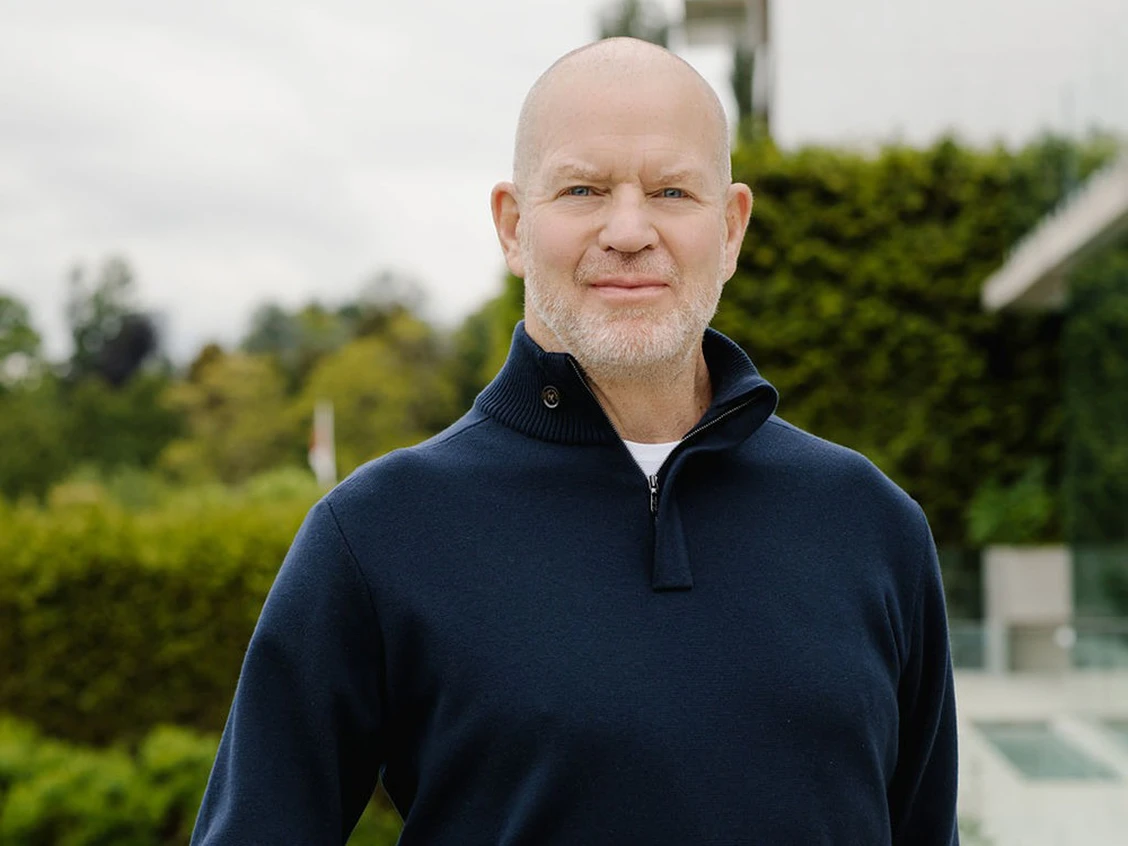
Photo | Lululemon
07. Vishen Lakhiani — The Malaysian Who Built a Global Education Empire From KL
Behind the scenes: Computer engineering degree, University of Michigan. Sales and marketing in Silicon Valley.
The chapter: Founded Mindvalley in 2003. Now operating in 195 countries, with over 20 million students worldwide.
Vishen Lakhiani grew up in Kuala Lumpur, studied computer engineering at the University of Michigan, and moved to Silicon Valley in 2001 with the kind of ambitions that city was built for. The timing was wrong. The dot-com bubble had just burst, and he found himself working a telemarketing job, far from where he had imagined he would be.
What happened next was not a business pivot. It was a shift in understanding. He discovered meditation, applied it, and watched his own thinking transform in ways that no engineering curriculum had prepared him for. He became fascinated by one question: why does the education system teach people everything except how to actually think, perform, and live well?
He co-founded Mindvalley in 2003 as a digital publisher of personal development programmes. But here is the part that reveals his real strategic intelligence: he did not build it for Malaysia.
This was not indifference to his own country. It was clarity about market readiness. Vishen understood that a population raised on 'minum Milo anda jadi sihat dan kuat' — "drink Milo and you will be healthy and strong" — was a population that had not yet been given reason to question what it was told. In 2018, when he publicly challenged Nestlé on the sugar content of Milo in a video that was shared over 20 million times, the reaction from Malaysia proved his instinct correct. The country was not ready for that conversation. The world, however, was.
So Mindvalley went global from day one. Personal growth, consciousness, high performance. Not as fringe spirituality but as a serious, evidence-backed curriculum for people who had already decided they wanted more than conventional education was offering. The market existed. It was just not in KL.
Today, Mindvalley operates from Kuala Lumpur. The headquarters are still in Malaysia. But the students are everywhere, across 195 countries, and the company has attracted talent from 54 nations to relocate to KL to be part of it. Vishen did not abandon his country. He built something big enough that the world came to his country instead.
That is not luck. That is market intelligence at its most precise.

Photo | Vishen Lakhiani
What This Actually Means
The dropout myth is not wrong. It is just not the whole story.
For the few who have the terminal, the private school, the wealthy family, the right postcode at the right time, starting young with nothing but conviction can work. And when it does, it is spectacular.
But for the 90% who do not have those conditions, there is a different path. It is quieter. It does not get the TechCrunch headline. No one makes a Netflix documentary about it.
It looks like this: you go in. You learn the industry from the inside. You build the network. You absorb the failures that leave no public record. You develop the kind of clarity about a problem that can only come from having lived inside it for years. And then, when the timing is right, when you finally have the resources, the knowledge, and the version of yourself that can actually execute. You build.
Not from nothing. From everything you spent 20 years becoming.
They had been writing their chapter the whole time. Most people just were not reading it yet.
"The 90% path is slower. But the businesses it builds? They last."
So if you are reading this and you are in your 30s or 40s and you feel like you have missed something: you have not missed anything. You have been writing your chapter.
The question is whether you are ready to pull the trigger.
About the Author
Adinazeti Adnan is the Founder and Editor-in-Chief of Kulture Insider, a luxury lifestyle magazine covering the intersection of business and culture across Southeast Asia. She is also the Founder of Legacy Sound, a premium orchestra and cultural experiences agency.